Keeping Old Truths Alive With Six Strings and a Washboard
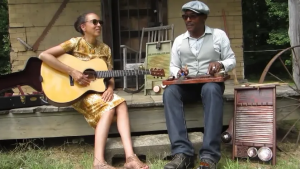 Every now and then you run across a pair of musicians who aren’t just playing songs — they’re carrying history on their backs. That’s the case with Valerie and Benedict Turner, the husband‑and‑wife team known as the Piedmont Blūz Acoustic Duo. They travel the country (and a good bit of the world) doing something rare these days: teaching America where its music came from while entertaining folks at the same time.
They don’t shout, they don’t grandstand, and they don’t try to modernize the blues into something it never was. They simply sit down, tell the truth, and play it the way the old masters handed it down.
Two Day Jobs, One Calling
Before they ever stepped onto a festival stage, both Turners had what most people would call “respectable careers.”
Valerie Turner — Information Technology
Valerie built a solid career in Information Technology, the kind of job that keeps the modern world humming. She studied at New York University and the Fashion Institute of Technology, then spent years in the IT field before retiring early. Only then did she turn her full attention to the music she’d been quietly mastering all along.
Benedict Turner — Advertising & Graphic Design
Benedict came from the world of Advertising and Graphic Design, also trained at the Fashion Institute of Technology. He, too, retired early — trading deadlines and design briefs for washboards, bones, and harmonicas. His artistic eye still shows up in the duo’s visual presentation, but his hands are now busy keeping time instead of pushing pixels.
Together, they walked away from the modern grind and stepped into something older, deeper, and far more American.
Valerie’s Musical Roots: A Quiet Force With a Fingerpicking Hand
Valerie Turner is one of those rare musicians who can make a guitar sound like it’s talking. Her style comes straight from the Piedmont fingerpicking tradition, the same school that produced Mississippi John Hurt, Elizabeth Cotten, and Etta Baker. She studied under John Cephas, one half of the legendary Cephas & Wiggins duo — a direct line to the old East Coast blues.
She’s also a writer and educator, contributing articles to music publications and teaching the history behind the songs. Her instructional book on Piedmont guitar was even picked up by the Library of Congress.
Benedict’s Rhythm: Washboard, Bones, and a Whole Lot of Heart
Benedict Turner doesn’t just play percussion — he builds it. His washboards are custom‑designed and played lap‑style with brushes and sticks. The sound is earthy, lively, and unmistakably tied to early African‑American folk traditions.
He also plays bones and harmonica, rounding out the duo’s sound with the kind of rhythm section you’d expect to hear on a front porch, not a concert stage.
What They Do on Stage
A Piedmont Blūz performance is part concert, part history lesson, and part front‑porch storytelling session. They believe there are “stories to tell, people to remember, and things that must be said,” and they weave those stories into every tune.
Their shows honor:
- Early African‑American blues pioneers
- Rural East Coast traditions
- The cultural roots of the music
- The everyday people who shaped the sound
They’ve played everywhere from New York to Israel, Spain, Ireland, and Germany, carrying the blues far beyond the soil where it was born.
In 2018, they were inducted into the New York Blues Hall of Fame — a well‑earned nod to their work as cultural preservationists.
Why They Matter
In a world that moves too fast and forgets too easily, the Piedmont Blūz Duo slows things down long enough for folks to remember where American music came from. They don’t dress it up or try to make it fashionable. They simply play it honest, the way the old-timers did — with respect, humility, and a deep sense of duty.
They’re not just musicians. They’re caretakers of a tradition that could have slipped through the cracks if not for people like them.
If you want, I can now shape this into a shorter, punchier version, or turn it into a Curbside Jimmy editorial with more attitude and humor.
Views: 16